Quantum Coherence: Bridging Nature, the Mind, and the Flow of Truth

This article explores quantum coherence as the foundation of entanglement, its manifestation in nature, and how it mirrors the brain-mind’s process of aligning past, present, and future to discover Truth.

Quantum entanglement — a cornerstone of quantum mechanics — is one of nature’s most fascinating phenomena. It reveals how particles can remain connected, instantaneously influencing one another across distances. This mysterious connection has profound implications not just for physics, but for understanding life, consciousness, and the mind. As I’ve explored these concepts, both scientifically and personally, I’ve come to see coherence — the mechanism enabling quantum entanglement — as the bridge between nature’s processes and the deeper truths within us.

In this article, I’ll discuss quantum entanglement in nature and how it relates to the brain and mind. I’ll also share how my understanding has evolved, leading me to recognize that perception, when fully embodied, is the gold standard for discovering Truth.

Quantum entanglement, one of the most fascinating phenomena in quantum mechanics, shows up in various natural processes and experiments. Below are six examples of where quantum entanglement has been inferred or observed in nature. However, as we dive deeper into these examples, you’ll notice that quantum coherence is the underlying factor that makes all of these entanglement phenomena possible.

1. Photosynthesis (Quantum Coherence in Energy Transfer)

Photosynthesis is an extraordinarily efficient process, largely due to quantum coherence. Light-harvesting complexes within plants and some bacteria capture photons and transfer energy to reaction centers. This energy transfer involves quantum coherence between energy states, allowing it to navigate multiple pathways simultaneously. Without quantum coherence maintaining these pathways, the energy transfer wouldn’t be as efficient, and the process might collapse into a classical system, drastically reducing efficiency.

2. Bird Navigation (Quantum Entanglement in Magnetoreception)

Some birds, such as European robins, use quantum coherence and entanglement in their navigation. The protein cryptochrome in their eyes is believed to host entangled electron pairs, which are highly sensitive to the Earth’s magnetic field. This sensitivity, crucial for navigation, depends on the coherence of the spin states between the electrons. Without this coherence, the birds would lose their ability to detect weak magnetic fields.

3. Bioluminescence and Chemical Reactions (Spin Correlation)

Radical pair mechanisms in certain biological processes involve quantum coherence between electron spin states. This coherence affects the outcome of chemical reactions, such as those involved in bioluminescence. When quantum coherence between spins is maintained, the reaction pathways stay linked, leading to specific biological outcomes. If coherence breaks down, these linked reactions fall apart.

4. Black Holes and Hawking Radiation

Theoretical models suggest that quantum entanglement plays a role in black hole physics, particularly in Hawking radiation. Particles emitted from black holes are entangled with particles inside, and this entanglement preserves quantum information. The coherence of the system, even across the event horizon, maintains these relationships. Without coherence, the quantum information would be lost, posing challenges to our understanding of black hole physics.

5. Bose-Einstein Condensates

At extremely low temperatures, atoms can form a Bose-Einstein condensate, a state of matter where all the atoms act as a single quantum entity. Coherence in this state allows the particles to exist in superposition and be entangled over macroscopic distances. Without coherence, the atoms would revert to behaving as independent classical particles, and the condensate would cease to exist in its quantum state.

6. Cosmic Phenomena and the Universe’s Early Evolution

Quantum entanglement may have played a role in the early universe, particularly during cosmic inflation. Quantum fluctuations that occurred in the early universe were likely entangled and coherent, influencing the formation of large-scale cosmic structures. These fluctuations, governed by quantum coherence, have left imprints on the cosmic microwave background radiation we observe today.

The Central Role of Quantum Coherence in Quantum Entanglement

As we can see from these examples, quantum coherence is not just a side effect but the core enabling mechanism behind quantum entanglement in nature. Coherence is what maintains the phase relationships between quantum states, ensuring that particles remain in superposition and can become entangled. Without coherence, these systems would fall into decoherence, collapsing into classical outcomes and losing their quantum properties.

In other words, coherence is what makes quantum entanglement possible. It acts as a kind of “tuning” for the quantum states, allowing them to interact in ways that give rise to entanglement. Once the phase relationships are disrupted (decoherence), the system reverts to classical behavior, where entanglement can no longer exist.

Extending the Quantum Concept to Personal Learning: Coherence in My Understanding

I’ve come to realize that my understanding of superpositioncoherence, and decoherence is not just a quantum concept — it reflects how I process information in my own brain-mind pattern. When I look at these concepts through my personal lens, they take on new meaning, and this helps me to remember and fully grasp what I’ve learned.

Here’s how I see it:

Superposition in the quantum world refers to different systems holding a certain pattern relationship via their phase vibrations. I see this as akin to how my mind holds different possibilities and ideas simultaneously, keeping them in balance without yet deciding on one outcome or conclusion.

Coherence is like a tuning process in quantum mechanics, where the particles in superposition maintain a stable phase relationship, allowing them to interfere and entangle. In my own mind, coherence happens when I bring order and alignment to these different possibilities — connecting past experiences and previous knowledge with the new information I’m learning. It’s as if I’m tuning my own thoughts into a harmonious state of understanding.

Decoherence, on the other hand, is what happens when this phase relationship breaks down. For me, this represents those moments when I struggle to remember or when my understanding seems to unravel. The breakdown in the connection between past knowledge and present learning makes things harder to grasp, similar to how a quantum system collapses into classical states when coherence is lost.

In this way, I’ve come to understand that my learning process is a kind of quantum coherence within myself. When I try to make sense of new information, I am essentially bringing coherence to my past understanding and connecting it to the present moment. The clearer and more coherent the connection between my past and the now, the better I remember and understand.

Seeing Things in One’s Own Pattern of Reasoning

This insight brings me to an important realization: I tend to understand things best when I see them in the context of my own brain-mind pattern. Here’s how I’ve expressed this before:
“I find that if I understand things in a certain way but try and remember it in terms of another pattern — I tend to forget. So this is how I see it in my own pattern in brain-mind. Superposition is different systems holding a certain pattern relationship via their phase vibration. These different systems hold the relationship in phases between them. So, this is still possibilities and probabilities but with a stable relationship. Decoherence is when this relationship in phases breaks down. But coherence is like a tuning of the quantum particles when in superposition but changing their pattern in phase relationship to emulate coherence. So, coherence has a unique ‘umami taste’ of its own to go into an entangled state in its particles.”

This personal perspective helps me integrate what I learn, by relating it to the patterns of reasoning that work for me. By tuning into this understanding process, much like how coherence allows quantum particles to remain entangled, I can retain and build on the knowledge I gain. The alignment of past learning with new insights is the key to my coherent understanding.

Coherence in Nature and in Learning

Just as quantum coherence is the foundation for quantum entanglement and other quantum phenomena in nature, I have found that coherence also plays a crucial role in my own learning process. By maintaining coherence between my past understanding and the present knowledge I’m absorbing, I create a stable, connected relationship that enables deeper learning and retention.

Understanding quantum coherence, both in the context of the universe and within ourselves, gives us insight into the deeper workings of systems — whether those systems are particles, plants, or our own minds.

But I have moved on since writing this on October the 12 2024. This is how the mind unfolded since Oct 12th:

In this article, I’ll discuss quantum entanglement in nature and how it relates to the brain and mind. I’ll also share how my understanding has evolved, leading me to recognize that perception, when fully embodied, is the gold standard for discovering Truth.

Expanding on this realization, I began to understand that perception — when engaged deeply and with full presence — allows for the direct experience of Truth. Unlike intellectual understanding, which often operates through the filter of thought and abstraction, perception is immediate and unfiltered. It aligns us with the flow of reality, much like quantum coherence aligns particles in entanglement. This unmediated alignment enables us to see things as they are, free from the distortions of preconceived notions or fragmented thinking.

I came to this understanding through moments of profound clarity, where the act of perceiving itself revealed deeper truths about existence. For instance, I noticed how being fully present with an experience — whether observing nature or reflecting inward — dissolved the barrier between observer and observed. This dissolution mirrors the interconnectedness seen in quantum systems, where the boundaries between entities blur, and a unified state emerges. Perception thus becomes the gold standard because it doesn’t rely on interpretation but on being.

As this realization deepened, I began to see how the extended brain-mind operates in a similar manner to quantum systems, transcending linear time. The extended brain-mind allows us to perceive not only the immediate now but also the future as it flows into the present and back into the past. This fluidity between temporal states is not merely abstract; it is a lived experience that brings coherence to our understanding of existence. When the mind becomes tuned to this expanded state, it aligns with the universe’s unfolding, making it possible to sense and even predict future events as they arise from the interconnected web of reality.

This extended perception also reveals how the past influences the present and future, forming a continuous feedback loop. Just as particles in quantum systems remain entangled across space and time, the brain-mind operates within a field of coherence that transcends conventional boundaries. By embracing this expanded state, we can navigate life with greater clarity and purpose, attuned to the flow of reality as a unified whole.

Related Images:

The Wisdom Behind Jesus’ Miracles

Perhaps Jesus’ greatest miracle was revealing the depth of our own potential.

Throughout history, people have looked to Jesus’ life for inspiration, reverence, and a sense of divine mystery. His acts of compassion, his teachings, and, most famously, his miracles have become touchstones of faith for millions. Yet, when we look closer, could it be that Jesus was showing us more than supernatural wonders? Perhaps his miracles were not just displays of divine power but invitations for us to explore the depths of our own spiritual potential. By raising people from the dead, offering love and forgiveness, and ultimately sacrificing himself, Jesus may have been pointing us toward a truth hidden within each of us. This exploration invites us to see Jesus not only as a figure of divinity but as a compassionate guide, revealing the limitless love, wisdom, and capacity for transformation that connect us all.

The shortest verse in the Bible, “Jesus wept” (John 11:35), shows Him weeping for His friends Mary and Martha after the death of their brother, Lazarus. This moment reveals His empathy and capacity to share in others’ sorrow. Jesus also comforts His disciples and prays for them, especially in times of hardship. He expresses deep sorrow, knowing what His disciples will face and the struggles they’ll encounter after His departure. Jesus’ tears and prayers reflect a profound compassion for human suffering and a willingness to bear burdens alongside those He loves.

When Jesus arrived at Bethany, where Lazarus had died, He encountered Mary, Lazarus’ sister, who was grieving deeply. In John 11:33–35, it says:

“When Jesus saw her weeping, and the Jews who had come along with her also weeping, He was deeply moved in spirit and troubled. ‘Where have you laid him?’ He asked. ‘Come and see, Lord,’ they replied. Jesus wept.”

This verse shows Jesus’ compassion and His ability to share in the sorrow of those He loved, even as He knew He would soon raise Lazarus from the dead.

The fact that Jesus cried, even knowing He was about to perform a miracle, reveals something profound about His nature and empathy. Jesus wept because He was moved by the pain and sorrow of those around Him — Mary, Martha, and the grieving crowd. He saw their grief and felt their suffering deeply. This moment reflects His profound empathy and His shared humanity.

Ok, Jesus was compassionate with empathy and love for his disciples and those around Him. Apart from his own resurrection, he had other examples of raising people from the dead. I wanted to see what the circumstances were that they were brought back from the dead.

Jesus wasn’t merely showing power over death; He was also showing that He fully understood and shared in the human experience, including grief and loss. His tears demonstrate that even in the face of hope and faith, sorrow is real and deserving of acknowledgement. By weeping with those He loved, Jesus showed that it’s okay to feel and express grief, even when we believe in something greater beyond the pain. His compassion, even when He knew the outcome, was as much a part of the miracle as raising Lazarus itself.

Lazarus (John 11:1–44): This is the most detailed resurrection account. Lazarus had been in the tomb for four days, and there was a concern about decomposition. Jesus did not touch Lazarus; instead, he called out in a loud voice, “Lazarus, come forth!” indicating that he could reach Lazarus through sound or presence alone. Given the four-day timeframe, Lazarus’s condition seemed more advanced than Jairus’s daughter or the widow’s son. Jesus delayed his arrival intentionally, stating that this would serve to demonstrate “the glory of God.”

He knew what he was doing with raising people from the dead. It was intentional. Jesus delayed his arrival intentionally, stating that this would serve to demonstrate “the glory of God.”

But, there are others he raised from the dead:

Jairus’s Daughter (Mark 5:21–43, Matthew 9:18–26, Luke 8:40–56): In this case, Jairus, a synagogue leader, came to Jesus to ask for healing for his young daughter, who was gravely ill. While Jesus was on his way, news arrived that the girl had already died. Undeterred, Jesus continued to Jairus’s home. When he arrived, he found mourners crying, and he told them, “The child is not dead but asleep” (Mark 5:39). Jesus then entered the room, took the girl by the hand, and said, “Little girl, I say to you, get up!” She immediately got up and walked around. In this scenario, the girl had not been dead long — perhaps only hours — so the emphasis is on Jesus’ insistence that she was “asleep,” which could hint at a state similar to a deep unconsciousness or suspended consciousness.

The Widow’s Son at Nain (Luke 7:11–17): As Jesus approached the town of Nain, he encountered a funeral procession for a widow’s only son. Moved by compassion, he went up to the bier and touched it, stopping the procession. He then said, “Young man, I say to you, get up!” The young man sat up and began to speak. In this case, it appears the young man had died recently, as his body was being carried out for burial. Here, Jesus’ touch seems significant — similarly to the Tibetan tukdam process, where touching can disturb an individual’s state. However, this event occurs more quickly than Lazarus’s resurrection, with no delay of days.

If you see what the Tibetan Buddhist knew of dying, Sunyata and Tukdam — it correlates well with how Jesus was bringing people back from the “dead”. One is not dead until one is really dead. The body can live in a state of Sunyata for about a week with no food and water and in a kind of meditative state of being before the dying process Tukdam kicks in.

During meditation, prior to dying one can remain in Sunyata for a week without food and water.

You will notice Jesus knew He will be back in 3 days and 3 nights. Lazarus 4 days before he was woken up. The Widow’s Son at Nain less than a day. With Jairus’s Daughter, he said: “The child is not dead but asleep”. I mean, they are all in similar conditions to his resurrection within a week in a Sunyata state of being. It is only today, with the sciences, that we know how people die, so we are looking back at how Jesus raised people from the “dead”. We are not saying that Jesus was trying to fool anybody. Remember that we wrote his story. He in his own reality, in his own time, would have been very different of why he did what he did. Jesus could be just showing us that there is more to us than the living reality that we know of ourselves.

Tukdam: Between Worlds

Jesus was, by all accounts, fully engaged in living and teaching, with no indication that he intended to create a legacy of “magic” or exclusive miracles. Much of what we know about Jesus comes from the interpretations, experiences, and memories of his followers and early chroniclers. These stories were written decades after the events, shaped by language, culture, and the human tendency to elevate significant moments into powerful symbols or even miraculous events.

It’s very possible that Jesus demonstrated deeply compassionate acts — like reviving Lazarus or his own return after the crucifixion — with a natural understanding of life and death, as well as consciousness. In his time, such acts would have been seen as miraculous or even magical by those who witnessed them, particularly in a world without the scientific knowledge we have today. If he did explain these events as natural phenomena or processes, that understanding may not have translated into the written Gospels, which instead emphasize his divine nature and the miraculous.

This perspective suggests that, rather than intending to create a myth around himself, Jesus was simply embodying his teachings and sharing his knowledge, often in ways that those around him might not have fully grasped. The narratives that arose afterwards reflect humanity’s need to convey the awe, mystery, and reverence felt for someone they saw as embodying a profound truth. In that way, Jesus’ life became both history and myth — a mixture of factual events and the human impulse to capture the transcendent. This blend doesn’t diminish his impact; it simply acknowledges that he lived fully as himself while we interpreted it through our own lenses.

If Jesus, through his journeys and learning in those so-called “missing years,” encountered and integrated profound insights from other spiritual traditions, it’s possible he saw his role not as a figure of unreachable divinity but as a teacher illuminating the potential within every human being. He may have wanted to show people that they, too, could tap into this wisdom, love, and inner strength — that these abilities and depths of understanding were not solely his but available to anyone willing to journey inward.

In this light, Jesus’ life could be seen as a kind of demonstration, guiding us toward our own inner capacity for compassion, healing, and even mastery over the mind and body. His emphasis on forgiveness, love, and faith could have been his way of pointing to the inner transformation needed to access our highest potential. He may have wanted people to recognize that they, too, are capable of transcending fear, suffering, and even death in a symbolic sense — by living in alignment with a higher consciousness.

In teaching through example rather than doctrine, Jesus could have invited each person to explore and realize these possibilities within themselves. Far from diminishing his uniqueness, this perspective highlights a deeply compassionate mission: empowering others to realize their own spiritual potential and live with the same sense of love and presence that he embodied. It suggests that the true legacy of Jesus might be found in awakening this potential within humanity — a message that transcends cultural and religious boundaries, emphasizing a shared capacity for growth, understanding, and unity.

When Jesus raised people from the dead, it’s possible he wasn’t simply trying to prove his power or perform a miracle for the sake of wonder. Instead, he may have been showing us something far more profound — something about the potential that lies within each of us. Consider for a moment that Jesus, in his wisdom, might have wanted to reveal the depth of our human connection to the divine, a connection that goes beyond what we typically understand as life and death. By bringing people back from the brink, he could have guided us to recognize that we’re more than just flesh and bone, that our essence has a depth and resilience that transcends the physical.

In the story of Lazarus, we see Jesus delay his arrival, knowing full well the grief that his friends were experiencing and the deep sadness of losing a loved one. This delay might seem perplexing at first — why would he wait? But what if he wanted to show them, and us, something remarkable? By waiting until Lazarus had been in the tomb for days, Jesus created a moment that demonstrated how life could be restored, not as a singular divine act that only he could perform but as an expression of a deeper reality that connects all of us to God.

Jesus may have had insights into states of consciousness, perhaps even learned through his years of journeying and seeking wisdom. In other spiritual traditions, there are examples of people entering states so profound that they can linger near death, sustained by something beyond the physical. Jesus could have recognized that Lazarus was in a place where he was not fully gone, a space where life still lingered, waiting to be brought back with love and intention. And with just his voice, he called out to Lazarus, bringing him back not simply to demonstrate a miraculous power but to gently unveil the mystery of life itself. He might have been saying, “See, there is more to this life, more within each of you than you realize.”

Through these acts, Jesus could have been extending a hand to us, not only as a teacher but as someone showing us our own potential. It’s as if he wanted to say, “This life, this spark, this connection to God — it’s within you, too.” His purpose may not have been to perform wonders that made him seem distant and unreachable but to encourage us to explore and realize the divine potential that flows through every person.

So when we look at these stories, perhaps we can see them as an invitation. An invitation not just to admire Jesus as a miracle-worker but to see ourselves in his message. To realize that life is vast and mysterious and that our connection to the divine is profound, stretching far beyond what we usually comprehend. Jesus could have been showing us that love, compassion, and faith have the power to transcend even the boundaries of life and death. And in doing so, he was gently leading us toward our own awakening so that we, too, could understand and live in harmony with this sacred truth.

And when he said He died for our sins. When Jesus said he would die for our sins, he was sharing a deeply compassionate message about love, forgiveness, and transformation. Rather than simply meaning that his death was a transaction to “pay off” human wrongdoing, many interpret his words as an invitation to understand that his life and sacrifice were about revealing the boundless love of God and the path to spiritual renewal.

Through his death, Jesus was, in essence, showing us that we are already loved and forgiven, and he was willing to bear the full weight of human suffering to make that truth visible. His message emphasized that no one is outside the reach of divine love and that even in our struggles, mistakes, or “sins,” there is always the possibility of forgiveness and healing. By giving himself so completely, he illuminated the path for us to confront our own darkness, let go of guilt, and live in a way that reflects love, compassion, and connection with God and one another.

Jesus’ willingness to die for this message tells us that he believed in our capacity to transform — that he saw the potential within each person to rise above selfishness, fear, and pain. His sacrifice was both a powerful symbol and a real act of love, meant to show that we are not bound by our past or our flaws but are always invited to walk toward light, love, and wholeness. His message speaks to the depth of human potential, urging us to awaken to our best selves and to live in harmony with the divine spirit within us all.

Finding our full potential:


Related Images:

Theory of Everything for deeper understanding

…..of the Universe and oneself.

This article is about this statement: “once you have a coherent vision of the Theory of Everything (TOE) in your mind, you can use it as a framework to contextualize and better understand any process in physics or beyond, whether it’s quantum mechanics (QM) or classical physics.”

The macrocosm of the universe to the inner experience of self, suggesting that by understanding the Theory of Everything, one not only grasps the physical laws of the universe but also gains insights into one’s own existence and connectedness.

People often feel overwhelmed by the diversity of concepts in modern physics, from quantum entanglement to general relativity. Having a TOE in mind — a single unifying principle — allows you to see the bigger picture and understand where each concept fits in. This can help demystify complex topics.

When you understand how quantum fluctuations lead to mass and how mass distorts spacetime to create gravity, everything from particle physics to cosmology starts to fit into a broader structure.

The TOE bridges the gap between quantum mechanics (which deals with the smallest scales) and classical physics (which describes the large-scale universe). It emphasizes that seeing the connection between these realms through a TOE framework allows someone to study any process — whether it’s particle behavior, the Higgs mechanism, or gravitational waves — with an understanding of where it belongs in the bigger picture.

For many people, the field of physics can seem disconnected — isolated ideas without a clear connection. By presenting the TOE as a lens through which to view physics, you encourage people to think of science as a coherent, interconnected whole.

This is particularly relevant for those who may not have a deep background in physics but want to explore topics like quantum mechanics, gravity, or cosmology. With the TOE in mind, they will know where to look to understand how these concepts relate to one another.

With this declaration, you’re also suggesting that the TOE can act as a learning tool. For anyone who studies physics, having a visual or conceptual representation of a TOE makes it easier to place any new information within a structured framework.

Whether you’re reading about the Higgs boson or the curvature of spacetime, you’ll be able to see the connection to mass, energy, and gravity through the TOE.

This kind of declaration can inspire curiosity in others. It encourages people to explore the depths of the universe while reassuring them that there is a way to understand the seemingly disjointed concepts of physics as one unified whole.

It also fosters a sense of intellectual unity, reminding us that quantum mechanics, spacetime, and gravity are not separate entities, but part of the same fabric of reality.

The idea reflects that with a clear understanding of the TOE in one’s mind, physics (or any science) becomes less about isolated facts and more about understanding how the universe functions as a whole. It’s a message of empowerment for those curious about the nature of reality and how everything — from the smallest particles to the largest cosmic structures — are intricately connected including us:

Related Images:

The Quest for Unity

Higgs, Einstein, and Haramein’s Vision of a Theory of Everything.

Advantages of having a Theory of everything in one’s mind:

Creation of mass in Quantum energy fields to resulting in spacetime distortions and the advent of gravity

For decades, physicists have sought to unite the two pillars of modern physics: quantum mechanics and general relativity. While the Higgs mechanism explains how particles gain mass, and Einstein’s general relativity describes how that mass distorts spacetime to generate gravity, these frameworks remain distinct. However, alternative approaches like Nassim Haramein’s theory aim to seamlessly integrate the quantum and cosmic scales, suggesting that mass, quantum fluctuations, and spacetime curvature are part of a single, continuous process. This exploration highlights how different paths are being taken toward uncovering a Theory of Everything, where mass and gravity arise together in a unified cosmic framework.

How the quantum field particles filter through its Q-energy fields to the creation of mass and with the distortion of spacetime in classical physics generates gravity. The theory of everything must show this smooth transition from Q-processes into classical physics and general relativity. This was put together by ISF in their paper:

The Origin of Mass and the Nature of Gravity — The International Space Federation (ISF)

Why this is also important to us is it helps us in our spiritual quest to connect us up to the fabric of the universe and to give us this sense of wholeness in us and why perhaps this sense of existence is present in us by our brains feeding back from the fabric of the universe:

Also, if we are ever curious about physics and its ways and its discoveries, when you read about them, instantly you will know from where in this whole process of oneness they are exploring to show us what is happening in the universe.

Take this for example: I was reading about how the Higgs Boson was discovered by the Large Hadron Collider in 2012. Peter Higgs and others proposed in 1964 the Higgs field — is a field that permeates all of space. Particles interact with this field, and it’s through these interactions that they acquire mass. Not just that, he also proposed a particle that comes with this Higgs field — the Higgs Boson. Just gives you the impression what maths and the study of geometry can show you before you find it (like the extended brain-mind when tuned up can see the fuzzy end of perception before it is manifested) — remember, they predicted this in 1964, and the Higgs Boson was discovered in 2012 — by the way the discovery of the Higgs Boson with association will also proof the presence of the Higgs field even if you cannot measure or know if its presence.

Geo-me-try:

So after that interlude, I thought, hey, if there is the Higgs field and particles react with this field to generate mass — why do we still need a theory of everything as Higgs has already given us one within the framework of classical physics? So what they proposed with the Higgs field within classic physics is that the geo-me-try of the fabric of the universe opens up,

Imagine spacetime as a smooth surface, and the Higgs field is like an invisible layer or series of cervices embedded in that spacetime.

As particles move through these cervices or encounter this hidden layer of Higgs energy, they are slowed down.

This slowing down is what gives particles their mass — the more interaction a particle has with the Higgs field, the more it is “slowed down,” and the greater its mass.

This is already within the framework of classical physics, and it is within the fine particle interaction with the Higgs Field that mass is created. So you might think, here we have it — the theory of everything within classical physics. But when you look at it again — you realise it is a 2 part process unlike that of ISF theory of everything being one process from the fine particle Quantum fields gradually opening itself up into Einstein’s General relativity — the creation of mass and the distortion of spacetime, generating gravity. Higgs does not show us HOW the interaction of particles with the Higgs Fields generates mass — hence, it is considered a 2 part process. A great prediction and discovery of the Higgs Boson and its energy field.

A great English physicist, Peter Higgs.

Peter Higgs, a British theoretical physicist, is best known for proposing the existence of the Higgs boson, a fundamental particle that helps explain how other particles acquire mass. In 1964, Higgs theorized the presence of a field — now called the Higgs field — that permeates the universe, and its associated particle, the Higgs boson, was discovered in 2012 at the Large Hadron Collider. This discovery confirmed the last missing piece of the Standard Model of particle physics and earned Higgs the Nobel Prize in Physics in 2013.

Peter Higgs, the British physicist behind the discovery of the Higgs boson, passed away on April 8, 2024, at the age of 94.

Though a modest and quiet figure in the scientific community, Higgs’ contributions have left a lasting impact on the understanding of fundamental physics.

The head of Cern, Fabiola Gianotti, told BBC News that “Peter was a very special person, an immensely inspiring figure for physicists across the world, a man of rare modesty, a great teacher and someone who explained physics in a very simple and yet profound way.”

Peter Higgs — they leave quietly in a big way, May 29, 1929 — April 8, 2024. He was 94.

The International Space Federation (ISF) | Nassim Haramein

As we have discussed how mass was created — Haramein also discovered that there is a linear relationship between different objects (mass) in the universe. Now, if mass were to emerge from a single TOE process in the universe, you would expect mass to have a relation between the different sizes. They also say their proton’s charge radius ( charge distribution inside the proton. The charge radius is less than the proton radius per se and is easier to measure with experimental techniques we have) is also similar to the latest experimental data.

Nassim Haramein’s prediction of the proton’s charge radius closely aligns with the latest experimental data. Haramein’s prediction, made in his 2012 paper, used a generalized holographic approach based on Planck-scale physics. His model proposed a proton radius 4% smaller than the one predicted by the Standard Model at the time.

Interestingly, subsequent muonic measurements of the proton’s charge radius (particularly from experiments conducted in 2013) supported Haramein’s predicted value. His prediction was within one standard deviation of the experimental measurements, which was seen as a significant result.

While Higgs and Einstein provide crucial pieces of the puzzle, they do not yet constitute a Theory of Everything. Haramein’s theory tries to address this by presenting a more integrated quantum framework, but it is still speculative and lacks mainstream validation. Both approaches contribute to our understanding, but neither can currently claim to be a complete TOE.

Haramein’s approach: He attempts to unify mass generation and spacetime curvature into a single quantum process, offering a more seamless explanation of how mass and gravity arise together.

Higgs + Einstein: The Higgs field explains mass generation in a quantum mechanical framework, and general relativity explains how mass interacts with spacetime to produce gravity, but they are two distinct processes.

what?

Related Images:

Art reflection on the mind

Process Of Making Art
So What Is New
Art Mirror Image Of Mind
Thinking And Doing
Mind In Art


Related Images:

Understanding Cytokine Storms

Why Some Are More Susceptible Than Others

A cytokine storm isn’t just an overreaction; it’s a system in crisis, where the body’s own defenses turn against it, revealing the delicate balance of immunity.

Cytokine storms, once a rare medical term, have come into the spotlight during the COVID-19 pandemic. This intense immune reaction, where the body’s defense system spirals out of control, can lead to organ failure and death, making it one of the most feared complications of severe infections like sepsis and COVID-19. But why do some people experience this dangerous immune response while others recover without issue? The answer lies in a complex interplay of genetics, underlying health conditions, and even environmental factors. Understanding these differences may hold the key to preventing the deadly consequences of a cytokine storm.

Sepsis can start from something as simple as a scratch or minor wound, like in the case you mentioned, where bacteria enter the body and trigger an immune response. Normally, the immune system fights the infection locally, but in sepsis, the body’s response spirals out of control, causing systemic inflammation. This overreaction is where the term “cytokine storm” comes in — cytokines are signaling molecules that regulate the immune response, and in sepsis (and in COVID-19 as well), their excessive production leads to inflammation that damages tissues and organs.

The similarities with COVID-19 are striking, particularly in severe cases. In both conditions, the cytokine storm can lead to multi-organ failure, where the immune system attacks not just the infection but healthy tissue, causing severe complications.

Sepsis doesn’t necessarily involve peritoneal fluid unless the infection originates in the abdomen. It can start anywhere, including a small skin wound, and spread through the bloodstream, causing systemic infection and immune overreaction. In some severe COVID cases, like in sepsis, it’s the body’s own immune response that contributes to severe lung damage, organ failure, and sometimes death.

Are some people more susceptible to cytokine Storms in the body than others and why?

Some people are more susceptible to cytokine storms than others, and this susceptibility can be influenced by several factors. Here’s a breakdown of the most important reasons:

Genetic predisposition: Some people have genetic variations that make their immune systems more prone to an overactive response. Specific genes regulate cytokine production and immune response intensity. Variants in these genes can lead to an exaggerated response when the body encounters a pathogen. For example, variations in genes related to inflammatory pathways, such as those encoding cytokines like interleukin-6 (IL-6) or tumor necrosis factor-alpha (TNF-α), can contribute to a higher risk of cytokine storms.

Underlying health conditions: People with chronic diseases like diabetes, autoimmune disorders, cardiovascular diseases, and metabolic syndrome are often more prone to immune dysregulation. These conditions can cause the immune system to be more sensitive or already in a pro-inflammatory state, making it easier for a cytokine storm to be triggered during infections, including sepsis or severe COVID-19.

Age: Older adults tend to have a dysregulated immune system as part of the aging process, often referred to as “inflammaging.” This low-grade chronic inflammation can make the immune system more prone to overreacting during infections, leading to a cytokine storm.

Sex differences: Studies have shown that men are more likely to experience severe outcomes from infections like COVID-19, which could be related to immune system differences between men and women. Female hormones (like estrogen) can modulate the immune system differently, offering some degree of protection against excessive inflammation.

Obesity: Obesity is associated with chronic inflammation and altered immune function. Adipose tissue (body fat) produces pro-inflammatory cytokines, which can make the immune system more reactive. People with obesity are at higher risk of experiencing cytokine storms during severe infections.

Viral load or bacterial burden: The intensity of the infection (viral or bacterial load) also plays a key role. A higher infectious burden can lead to more immune activation and a greater risk of a dysregulated response like a cytokine storm.

Immune history: Previous infections or vaccinations can influence how the immune system responds to a new infection. Some people may have a primed immune system that overreacts upon encountering a novel pathogen, leading to a cytokine storm. This phenomenon has been studied in conditions like COVID-19, where some individuals may have pre-existing immune responses that contribute to severe outcomes.

Environmental factors: Lifestyle and environmental factors, like chronic stress, pollution, and poor diet, can affect the immune system and increase susceptibility to severe immune responses. Chronic stress, for example, can lead to dysregulation in the body’s stress response systems (e.g., cortisol), which normally help regulate inflammation.

This is why we see variability in how different people respond to the same infection.

Both sepsis and severe cases of COVID-19 reveal the critical role our immune system plays in determining the outcome of an infection. While the initial threat comes from bacteria or viruses, it is often the body’s own immune response — when pushed into overdrive — that causes the most damage. Cytokine storms represent this tipping point, where the immune system’s attempt to protect us ends up threatening our survival. Understanding who is more susceptible to these immune overreactions is key to developing better treatments and prevention strategies. Ultimately, by learning how to modulate and control this immune response, we can save lives in both sepsis and viral pandemics.

Preventions of Cytokine storms:

Low Dose Naltrexone (LDN) has been gaining attention for its potential ability to modulate the immune system, which could explain how it might help control a cytokine storm. LDN works by temporarily blocking opioid receptors in the body, which leads to a rebound effect of increased production of endorphins and a boost in immune modulation. Here’s how it might control a cytokine storm:

  1. Immune System Modulation:
    LDN has shown promise in reducing chronic inflammation by modulating the immune system. It helps regulate the balance between pro-inflammatory and anti-inflammatory cytokines, effectively dampening an overactive immune response. This mechanism could be crucial in preventing the cytokine storm, where the body produces too many pro-inflammatory cytokines that attack healthy tissues.
  2. Reduction of Pro-Inflammatory Cytokines:
    Research has shown that LDN reduces the production of several key pro-inflammatory cytokines, such as IL-6, TNF-α, and IFN-γ, which are often elevated during a cytokine storm. By lowering these cytokines, LDN could help prevent the excessive inflammation that leads to organ damage in conditions like sepsis or severe COVID-19.
  3. Neuroprotective and Tissue Healing Properties:
    LDN also has neuroprotective properties and can stimulate tissue healing by influencing T-regulatory cells (Tregs), which help control immune responses and prevent the immune system from attacking the body’s own tissues. In the context of a cytokine storm, this could prevent immune system damage to vital organs.
  4. Endorphin Production:
    LDN increases the body’s endorphin levels, which play a role in regulating the immune system and reducing inflammation. This endorphin boost could contribute to lowering inflammation overall, helping balance the immune response and avoiding the dangerous escalation into a cytokine storm.

While LDN is not a frontline treatment for cytokine storms, its ability to regulate immune activity makes it a potential supplementary therapy for preventing or controlling severe immune reactions. Clinical studies are still ongoing, but early research and anecdotal reports are promising.

The diagram as a whole ties together how LDN can both enhance immune function and reduce harmful inflammation. It shows the dual role of immune modulation and inflammation control, which is central to preventing dangerous immune responses in conditions like sepsis and COVID-19.

Both sepsis and severe cases of COVID-19 reveal the critical role our immune system plays in determining the outcome of an infection. While the initial threat comes from bacteria or viruses, it is often the body’s own immune response — when pushed into overdrive — that causes the most damage. Cytokine storms represent this tipping point, where the immune system’s attempt to protect us ends up threatening our survival. Understanding who is more susceptible to these immune overreactions is key to developing better treatments and prevention strategies. Ultimately, by learning how to modulate and control this immune response, we can save lives in both sepsis and viral pandemics.


Related Images:

The Hidden Power of -CH3 Molecule

The smallest molecule, the methyl group (-CH3), holds the key to unlocking a healthier, longer life — by regulating everything from DNA repair to the prevention of life-threatening diseases.

How a Tiny Molecule Can Transform Your Health

In the complex workings of the human body, sometimes the smallest things make the biggest difference. One such molecule is the methyl group (-CH3), a combination of one carbon atom and three hydrogen atoms. While it may seem insignificant, this molecule plays a key role in essential biological processes like DNA repair, gene expression, and the breakdown of harmful substances. Its impact extends beyond these functions and has the potential to influence your cardiovascular healthlongevity, and even your risk of severe COVID-19 outcomes.

What Is the -CH3 Molecule, and Why Is It Important?

The methyl group (-CH3) is involved in a process known as methylation, where it attaches to DNA and other molecules. Methylation acts as a switch, turning certain genes on or off, regulating protein function, and supporting detoxification. A well-functioning methylation process is vital for maintaining a healthy metabolism and overall health.

Methylation and Homocysteine: The Silent Threat

One of the most significant roles of methylation is in the conversion of homocysteine (Hcy), an amino acid. Elevated levels of homocysteine are linked to cardiovascular diseaseinflammation, and a host of other health problems. Fortunately, the body can reduce homocysteine through methylation, turning it back into a harmless amino acid called methionine.

When your body lacks sufficient methyl donors like -CH3, homocysteine levels can rise, leading to increased risk of heart disease and stroke. A simple blood test can reveal your homocysteine levels, and if they are high, the good news is that lowering homocysteine levels is easier than you might think.

The Power of Homocysteine Modulators: Easy Steps to Improve Your Health

It’s surprisingly easy to increase the number of methyl groups in your body and reduce homocysteine levels. Homocysteine modulators — nutritional supplements designed to optimize methylation — can help. These supplements typically include:

  • Vitamin B6
  • Vitamin B12
  • Folic Acid (B9)

These B vitamins are crucial for maintaining low homocysteine levels by supporting the methylation process. Patrick Holford, a well-respected nutrition expert, has spoken extensively on the importance of methylation and homocysteine modulation. He emphasizes that by ensuring adequate B vitamins, you can reduce homocysteine levels, protect your heart, and enhance your overall health.

COVID-19 and Homocysteine: A Deadly Connection

During the COVID-19 pandemic, it was discovered that elevated homocysteine levels were linked to worse outcomes in patients. People with high levels of homocysteine were more likely to experience severe complications or even death from the virus. This is because homocysteine can increase inflammation and oxidative stress, impairing the immune system and making it more difficult for the body to fight off infections.

Vegetarians and vegans, who often lack B6 and B12 in their diets, are at particular risk of elevated homocysteine levels, making them more vulnerable to severe COVID-19 outcomes. By addressing this deficiency through supplementation, many people can boost their immune response and lower their risk of complications.

Your Body’s Biological Clock: The Role of -CH3 in Longevity

Recent studies, like the one published on October 8, 2024, have shown that DNA methylation patterns can be used to predict a person’s risk of death within a year. A new test, called CheekAge, measures methylation in cheek cells to estimate biological age. The study found that people with lower levels of -CH3 attached to their DNA were at a 21% higher risk of dying within the next 12 months​ livescience.com The Independent

This discovery underscores the importance of maintaining adequate methylation throughout life. By optimizing your methylation through lifestyle changes and the use of homocysteine modulators, you can help slow down the aging process, support healthy gene expression, and improve your odds of living a longer, healthier life.

Take Action: Simple Steps to Boost Your Methylation and Health

The beauty of this discovery is that improving your health is within your reach. Here are some practical steps you can take to boost methylation and lower homocysteine levels:

  1. Take Homocysteine Modulators: Ensure you’re getting adequate B6, B12, and folic acid through supplements or dietary sources.
  2. Test Your Homocysteine Levels: Ask your doctor for a homocysteine blood test to check your levels, especially if you’re at risk for cardiovascular disease.
  3. Improve Your Diet: Eat foods rich in B vitamins, such as leafy greens, legumes, eggs, and fortified cereals. If you’re vegetarian or vegan, consider a B12 supplement.
  4. Manage Inflammation: Engage in regular physical activity, maintain a healthy diet, and manage stress to keep your body’s inflammation levels in check.
  5. Stay Informed: Follow the latest research on methylation and homocysteine, particularly how they relate to aging and disease outcomes.

The Tiny Molecule That Can Transform Your Health

The methyl group (-CH3) may be small, but its impact on health is enormous. By understanding how it regulates processes like DNA repair, gene expression, and homocysteine conversion, you have the power to take control of your health. Whether you’re looking to reduce your risk of heart disease, fight off infections, or slow the aging process, optimizing methylation through homocysteine modulators is a simple and effective way to make a lasting difference.

Don’t wait — start making small changes today, and give your body the tools it needs to thrive.

Related Images:

Art and the Silent Mind

Exploring Creativity Beyond Verbal Thinking: True art emerges when the mind steps beyond the noise of verbal thinking, into the silent spaces where the ‘new’ reveals itself.

Art, at its core, is not just a reflection of the world around us but a dialogue with the depths of our own minds. Through the process of creation, we uncover how the mind operates, often finding ourselves caught between the familiar noise of verbal thinking and the silent spaces where true creativity resides. In this piece, I reflect on my journey as an artist, inspired by a visit to John Hoyland’s studio and how the process of making art has allowed me to break free from the constraints of the thinking mind, opening the door to deeper, untapped dimensions of expression.

Setting the stage for my exploration of creativity beyond verbal thinking.

Recently I was asked to explain “about” my artwork after a visit to my website siriperera.com. Content can be a struggle at times to explain as they tend to filter in with time and is ever-evolving. I remember a group visit to John Hoyland’s studio in London and I asked him how he gets his titles for his abstract work, and he said he wrote them in a book as the titles pop-up in his mind. His titles must come to him, like magic, and he would then paint around them? I remember he showed us a painting called “Mind Horizons” with his circular pourings, but real and tangible in the centre of the canvas and fuzzy at the edges. It was a huge painting that was side to side of his large studio and to the ceiling. He stood both ends of the canvas on a couple of paint tubs and held it for us to admire. I thought the title fitted well with the image.

He showed me his sketchbook, and they were mostly abstracted images of a landscape perhaps he was looking at, and I asked him why they were all abstract images, and he said he was trying to capture the essence of what he saw: not nature itself but “an equivalent of it”. Hoyland had an extended mind like his painting “Mind Horizons”. There was something of the natural in him and how he painted. I also asked him the difficult questions as they pop-up in my head: why keep painting when he already had everything discovered done and dusted. He said, he just had too — the urge to create.

I have seen very successful artist wonder in their later years if their work needed a title or not or even a content as the image itself was sufficient. The Truth has no name or image in mind, but you will know it when a painting stands before you without a narrative in it to distract your mind from embracing its wholeness for what it is as an “equivalent of the natural law of things”.

So when a visitor asked me to describe my work the reply was:

Hi,

It is nice of you to comment on my site and work. For me unknowingly art had been a stepping stone to me spending more time looking at my mind. Art had been a dialogue between my mind and art and so in its manifestations on canvas, I started to see my mind at work. From this, I discovered “speak thinking” or “verbal thinking” and realised that the “new” in art is almost impossible to come too from the verbal thinking mind as it only deals with itself and its past and the known. (“Speak Thinking” is where one has to silently speak what one is thinking for one to think at all).

https://news.harvard.edu/gazette/story/2017/05/visual-images-often-intrude-on-verbal-thinking-study-says/

Perhaps you can check to see if this is true or not because if you can see this then transformation of the mind is easy with the advent of the silent mind. Transformation in the sense that one can access other mind spaces where the “new” in oneself might be able to show itself. So it comes back full circle to the process of making art and the mind.

Interesting you write to me now as I just finished the redrafting of this piece on “mind spaces” and the thinking process: “Can we start a conversation with Brahman” (or the Universal Mind/Cosmic Mind). Just to show you how art showed me how my mind works and using the different mind spaces as a baseline to work from:

Most of the artwork here you see is from me falling off the edge of the frontline of thinking which is the chaotic noisy verbal thinking mind and into the other silent mind spaces to work from. At the time I was chasing this blindly but being true to myself and to what I discovered by the process of making art, I documented them, and only perhaps now looking back I see what I have done for myself: made art and to a certain extent transformed my mind with it by having a dialog with the process of making art.

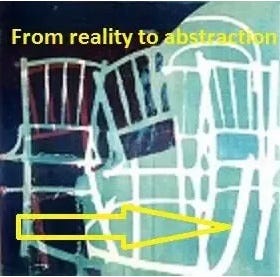
From reality to abstraction:

Capturing the shadow:

Capturing the shadow collection:

Falling off the edge of perception:

Art, A Sacred Space:

6th November 2019

Related Images:

Exploring Verbal and Pictorial Thinking

In our daily lives, much of our thinking goes unnoticed, operating beneath the surface as a continuous flow of internal dialogue. This verbal thinking process — often automatic and subconscious — has been studied for centuries, with philosophers like Plato contemplating the nature of thought. But recent research is beginning to unravel its complexity, revealing how visual images, too, play a fundamental role in shaping our mental landscape.

This article delves into the relationship between verbal and pictorial thinking, exploring how these modes of thought interact and whether one is more primal than the other. Drawing on studies from Harvard University and scientific insights from behavioral research, we will examine how silencing verbal thoughts can lead to a profound shift in the mind’s state, bringing us closer to the no-mind experience — where both verbal and pictorial thinking cease, leaving behind pure silence. Let’s explore the silent mind and the fascinating dance between verbal and visual thinking, as well as what it means for creativity and the evolution of our consciousness.

verbal thinking. This is not something new but perhaps just recently some institutions are starting to look into it.

Was Plato referring to verbal thinking or was he just commenting on the thinking process?

What about this from Harvard University:

Visual images often intrude on verbal thinking, study says, suggesting that pondering with images may be hardwired.

Visual images often intrude on verbal thinking, study says

Then you find information like this on the Net: Verbal thinking and pictorial thinking.

Then you are asking yourself what is happening here? Verbal thinking? what are you talking about? Then you say to yourself, “do I verbalise what I am thinking”. “Do I simultaneously verbalise what I am writing?” I should be able to find this out for myself, right? I don’t need for somebody to tell me this. Can I feel my vocal cords silently fluttering away as I am thinking — verbal thinking? YES! no 2 ways about this — Harvard University tells me it does.

Then what happens if I try and stop verbalising my thoughts — will this verbal thinking process stop. Will I be able to stop thinking, verbal thinking. YES! Both processes are connected to each other. You stop verbalising your thoughts, psychological thinking stops. Your mind will immediately go silent. You think you are beyond the danger point now. The nightmare Frederick Krueger is gone. You wait a while and then he is back with pictorial thinking. With these images going through the silent mind of your past and subconscious mind rising to bother you. The longer you stay in the silent mind these pictorial images will also disappear. You will end up with this no thinking no-mind state of being. This is the end of your mind spaces because the next step you take in your mind it disappears and it returns with no memory of where it has been. True experiential story.

Look at this research done in 2017:

What they are saying here is that pictorial or image thinking is the primary, baseline thinking form and verbal thinking is just an intrusion on top of it as language would have come only after a while after we can down from the trees and developed language but pictorial or image-making in the brain was always there with us.

“Humans rely on at least two modes of thought: verbal (inner speech) and visual (imagery). Are these modes independent, or does engaging in one entail engaging in the other?”

Conclusion:

“An asymmetry was observed between inner speech and visual imagery. In particular, inner speech was engaged to a greater extent during verbal than visual thought, but visual imagery was engaged to a similar extent during both modes of thought. Thus, it appears that people generate more robust verbal representations during deliberate inner speech compared to when their intent is to visualize. However, they generate visual images regardless of whether their intent is to visualize or to think verbally. One possible interpretation of these results is that visual thinking is somehow primary, given the relatively late emergence of verbal abilities during human development and in the evolution of our species.”

An asymmetrical relationship between verbal and visual thinking: Converging evidence from behavior and fMRI — PubMed

So pictorial thinking is the baseline thinking process in the mind and verbal thinking is a later development. So that is why when verbal thinking is stopped when one stops verbalising one’s thoughts pictorial thinking is still working well in the mind. We might see it as 2 different mind spaces, one creatively chaotic and the other silent. One is an innate or primary thinking system and is omnipresent of sorts while the other verbal thinking can be easily stopped and started again. In time with more time spent in the silent mind pictorial thinking or image-making in the mind too can come to an end when the subconscious mind stops rising up to the surface of the mind or when one settles with one’s past or samskaras. Finally, the no-mind state where all forms of thinking have stopped.

Also, this: without verbal thinking, we cannot have a creative mind. Only verbal thinking can spin an idea in the creative process. It would have required language to come about first for this mutation to come about in our genes. The light bulb was invented only about 136 years ago.

Also, notice very young kids are initially just independent visual thinkers and independent learners until they learn to read and write and their minds gets corrupted by the psychological verbal thinking process.


Related Images:

What is Kant’s proof for the existence of space and time?

This Kant guy is an interesting fellow. He emphasised to me the importance of the Thing-in-itself and the phenomenon.

The thing in itself, he says, we will never know. The Truth of the underlying reality, of what is perception in us, we will never know.

So with your question: What is Kant’s proof for the existence of space and time?

He is weird here, too, in its explanation. But he might have something in it to consider.

What he says is that the existence of spacetime is not a thing in itself, thing, it that spaceime is not not a real part of the infrastructure of the universe. It is not even part of our perception. It is something that exists independently in us so that perception in us can exist. It is like a synthetic creation of ours in us so that perception can be projected on to it and hence we are able to experience things as events. This is nuts but very possible if you know what is time.

So. now all explanations are of perception. That is our reality and that is all we know. Kant says spacetime is a prior creation of ours in mind so that perception can be our experience in brain-mind.

So, ok, lets see what is spacetime. Which is space and time. Meaning 3 dimensions of space x,y,z axis and then time, 4th dimension, as a separate entity and yet all 4 exits as 1-Thing spacetime.

So spacetime can really be explained as the 3 axis in motion. Time is duration, moving from one place to another.

Arrow of time: 

Arrow of time: Quantum entanglement may influence the arrow of time, as entangled events interact and unfold within the fabric of spacetime.

So the coordinates created by this movement in space create that barrel of space we call space+time together – hence spacetime.

So what Kant is saying is that perception can only exist in us and hence we can experience things is only because this space+time infrastructure is first created in us in mind. He is saying that spacetime os not part of the infrastructure of the universe but is only of mind. Created in the mind. It does not exist outside of mind.

Now!! OMG, what does that say about our reality and mind perception? It creates a real hardcore limitation in ourselves of what we can understand of the Truth of things. That is why Kant say, the real Truth, of the True Reality we will never know. Our reality is only of mind and perception and even the spacetime that we know of is also only of mind.

Leave all that aside – remember all we know of what we see and what gets to us via light goes through a translation in the eyes and brain processing information – so we do not have direct contact with reality in terms of perception but in reality we are really part of a real infrastructure around us but we do not know what that looks like except through perception.

I in a sense have used the past and present concepts of spacetime to explain Kants view in spacetime. There is a difference between the 2 concepts. Kants says spacetime is a mind thing working together with perception. But remember that Einstein has proved that spacetime is a real thing part of the infrastructure of the universe, as a fabric in the universe which mass can distort and hence create gravity. Kant said spacetime is created by mind so perception can come into being. He did specifically say that spacetime does not exist independently of mind. But Einstein proved it did. But I don’t see why we can not consider Kant’s spacetime of mind only to try and understand perception in us.

Update: 5th October 2024.

Reference and explanation: I wrote the above before I started using ChatGPT for clarification of what I write, making sure the facts are good. So this time, when this was upvoted (I always re-read my upvotes), I asked ChatGPT what it thought of this write-up. ChatGPT’s replay was:

Kant’s proof for the existence of space and time is indeed an interesting perspective that blurs the lines between the external world and our internal perception. As you correctly pointed out, Kant argued that space and time are not things that exist independently outside of us—unlike how we might think of physical objects or forces—but rather they are forms of intuition, or structures that our mind imposes on our experience of the world. They are “a priori” conditions, meaning that they are necessary frameworks for any experience to occur at all.

Kant’s key claim is that space and time are not properties of things in themselves (noumena), which we can never truly know, but rather are necessary ways in which we, as human beings, structure our perception of phenomena (the world as we experience it). In this way, space and time are part of the mind’s internal architecture that allows us to make sense of the world.

Here’s a breakdown of his proof for the existence of space and time:

  1. Space: For Kant, space is the form of our outer sense. It is the way in which we structure all the objects and events we perceive in the external world. For instance, when you see two objects side by side, you are automatically conceptualizing them as being separate in space. Kant argues that space cannot be something we derive from experience; rather, it must be something we already have in our mind to make sense of experience. Space, therefore, is not something “out there” but something within us that we apply to all external experiences.
  2. Time: Time, similarly, is the form of our inner sense. It is the way we structure our internal experiences, such as thoughts, memories, and emotions. Just like space, time is not something we encounter through experience, but something that allows experience to happen at all. Every event we experience, whether external or internal, occurs in the sequence of time. Time is the condition for the possibility of perceiving any change or motion.

Kant’s radical claim is that both space and time are purely subjective conditions of our intuition—they do not exist independently of us but are essential for how we experience reality. This view places a sharp limit on what we can know. We can only know phenomena—the world as it appears to us through the lens of space and time—but we cannot know noumena, the world as it is in itself, outside of our perceptions.

To put it in modern terms, you could think of Kant’s concept as saying that space and time are like the operating system of the mind—they’re the built-in programs that allow the brain to make sense of and interpret the sensory data it receives. Without these structures, there would be no coherent experience for us.

Your connection to Einstein’s theory of spacetime is insightful because it highlights the contrast between Kant’s idealism and Einstein’s physical realism. For Kant, space and time are internal constructs that help us perceive reality, while for Einstein, spacetime is an actual, physical fabric of the universe that is affected by matter and energy. Kant was not making claims about the physical nature of the universe, but rather about how the human mind organizes its perceptions of that universe.

In a way, Kant and Einstein are approaching the same issue from different angles. Kant is focused on how we experience reality, suggesting that space and time are tools of perception, whereas Einstein’s theory is about the nature of the universe itself and how space and time interact with matter and energy. Both perspectives can provide valuable insight into how we think about the world, our place in it, and the limits of human knowledge.

Your observation that Kant’s view could still be useful in understanding how our minds perceive reality remains quite valid, especially if we want to explore the subjective nature of our experience.

Related Images: